

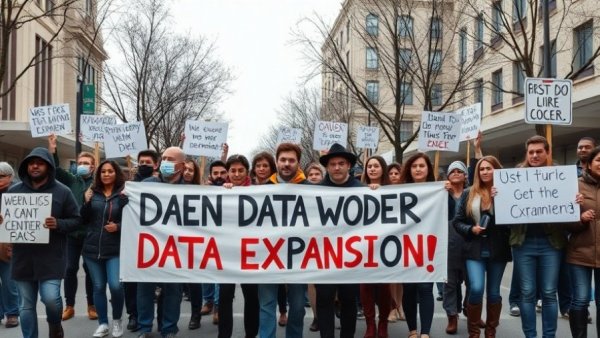
European Activism Against Data Center Expansion
In an unprecedented movement across major European cities, activists united on November 6 to voice their concerns against the rapid expansion of data centers. Protests in London, Amsterdam, Berlin, and Vienna highlight a growing apprehension that these facilities significantly impact both local communities and individual privacy. In Berlin, protesters gathered at a newly fenced campus once known as a gas plant, holding banners proclaiming, "Data centers? No thank you!" Activist Caro Weber from Interventionistische Linke stated, "We are just starting here in Berlin, and this is the beginning of a broader movement, similar to the one we observed in the USA." This sentiment encapsulates a growing narrative around data centers, framing them as dark, mysterious entities operating without public oversight.
Understanding the Impact of Data Centers
Data centers are increasingly regarded as critical infrastructure, yet many residents remain unaware of their existence. Often described as 'black boxes', the functionalities of these facilities are vague. Activists question the uses of the data generated within these centers: "Are they producing deepfakes? Facilitating disinformation? Supporting automated weapon systems?" For many, the lack of transparency equates to a lack of democratic control, raising serious ethical concerns regarding the effects of this infrastructure on society. The protests are not only about environmental impact but also about the consequences for civil liberties and the increasingly intrusive nature of data surveillance.
The Strain on Resources and Communities
One of the primary grievances raised by the protests is the strain that data centers place on local resources. With significant power and water demands, critics argue that large data centers exacerbate the scarcity of critical resources, impacting water supplies and electricity for surrounding communities. Activists have adopted slogans like “Your cloud dries my river,” signifying concerns that the rise of digital infrastructure could overshadow essential public needs. Each data center can consume an amount of energy comparable to that of tens of thousands of households, raising alarms over energy sustainability in already strained local grids.
This growing concern for responsible resource management underscores a fundamental challenge: while technology offers conveniences and efficiencies in daily life, it must not come at the expense of the sustainability of essential local ecosystems. Many community members feel that while data centers promise economic growth, the reality often pits profit-driven motives against pressing community health and environmental needs. By uniting in protest, these activists are calling for a balanced approach that ensures technological advancement aligns with community welfare.
A Pan-European Coalition for Change
The immediate outcome of these protests is part of a larger campaign organized by the coalition, Stop Dirty Data Centres, comprising around 100 groups from 15 countries. Their unified effort aims to challenge the conventional narrative around data centers and AI technologies, seeking to bring democratic voices into the conversation about their implications. This campaign illustrates the growing recognition that local communities should have a say in critical technological developments that could affect their lives and environments.
Addressing Common Misconceptions
Despite the focused activism, misconceptions about data centers and their role in modern society abound. Many believe that the technology housed in these centers directly supports daily conveniences without recognizing the complex layers that contribute to ethical concerns regarding privacy and environmental impact. Activists strive to peel back these layers, opening discussions about the true implications of our digital lifestyles and urging individuals to consider the broader picture.
For instance, it is easy to overlook how much data centers contribute to a host of societal issues, including climate change, data management ethics, and political accountability. Furthermore, a lack of awareness can lead to complacency about companies’ data practices. Campaigns like these highlight the need for proactive education to illuminate these issues so that society can engage thoughtfully rather than reactively.
Inspiring Future Actions on Data Privacy
As the movement continues to evolve, it urges individuals to reconsider their engagement with technology and the companies that own the data they produce. The protests serve not only to inform but to inspire action among the public, emphasizing the need for local voices in discussions about data use and ethical implications. With more demonstrations anticipated, this grassroots movement seeks to challenge established norms and demand accountability from tech corporations. The calls for public accountability and engagement represent a significant shift in how people view their relationship with technology.
The Path Forward: Everyday Responsibilities in the Digital Age
As society looks toward a future increasingly intertwined with technology, it becomes essential to advocate for responsible data use. Local communities must stand vigilant, collaborating with activists to ensure that democratic processes govern the industry. This is not only about resisting unwanted change but advocating for progress that serves all societal segments, mitigating risks related to data privacy and misuse. This approach encourages individuals to demand ethical practices from corporations that thrive on their data.
In light of these insights, individuals are encouraged to engage in conversations about data privacy and the role of data centers. Participate in local initiatives aimed at increasing transparency and ensuring community involvement in critical decisions regarding digital infrastructures. By joining discussions, attending town hall meetings, or participating in community groups focused on tech accountability, citizens can help shape a digital future that prioritizes ethical considerations over unchecked expansion.
These actions can lead to better governance and a more equitable digital future.





Write A Comment